Technology Research Series
Blockchain
Technology
A distributed ledger reshaping finance, supply chains, healthcare, and governance. From Bitcoin to smart contracts, blockchain is far more than digital money.
Introduction
What is Blockchain?
The Core Concept
A blockchain is a type of distributed database that stores data in blocks linked together in chronological order. Unlike a traditional database managed by a central authority, a blockchain is shared and maintained simultaneously across a network of computers, making it extremely difficult to alter or hack.
Each block contains a group of records, a timestamp, and a cryptographic hash that links it securely to the block before it. If someone tries to alter a block, the hash changes and breaks the link to every subsequent block, flagging the tampering immediately across the entire network.
This combination of decentralisation, cryptography, and consensus mechanisms makes blockchain a uniquely trustworthy system for recording information without needing a third party like a bank to verify anything.

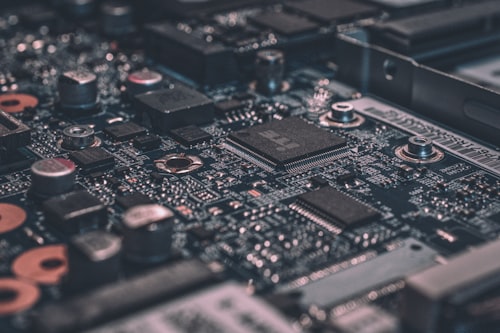
Blockchain: interconnected data blocks forming an immutable chain
Photo: Shubham Dhage / Unsplash
Why It Matters
Trust is expensive. In almost every industry, enormous resources are spent creating, verifying, and enforcing trust between parties who do not know each other. Banks verify transactions. Lawyers verify contracts. Governments verify identities. Auditors verify records. Blockchain offers a different approach: trust is built into the technology itself through mathematics and distributed consensus rather than through intermediaries.
This has the potential to reduce costs, increase transparency, accelerate processes, and open financial services to the estimated 1.4 billion adults worldwide who remain unbanked and excluded from traditional financial systems.
Explore the Topics
Chapter One
How It Works
Cryptographic hashing, consensus mechanisms, nodes, and smart contracts explained.
Explore →
Chapter Two
Applications
Finance, supply chains, healthcare, identity, and government use cases worldwide.
Explore →
Chapter Three
The Future
Web3, CBDCs, interoperability, scalability solutions, and the decade ahead.
Explore →| Indicator | Statistic | Source |
|---|---|---|
| Global blockchain market size (2023) | $17.57 billion USD | Grand View Research |
| Projected market size by 2030 | $1.43 trillion USD | Grand View Research |
| Blockchain wallets worldwide | Over 85 million | Statista |
| Countries researching CBDCs | 130+ nations | Atlantic Council |
| Banks testing blockchain solutions | 69% of major banks | Deloitte |
Context
Blockchain is widely associated with cryptocurrency, but the technology itself is general-purpose infrastructure. The vast majority of enterprise blockchain projects today focus on data integrity, supply chain visibility, and process automation rather than digital currencies of any kind.