// good eats by jessica peng

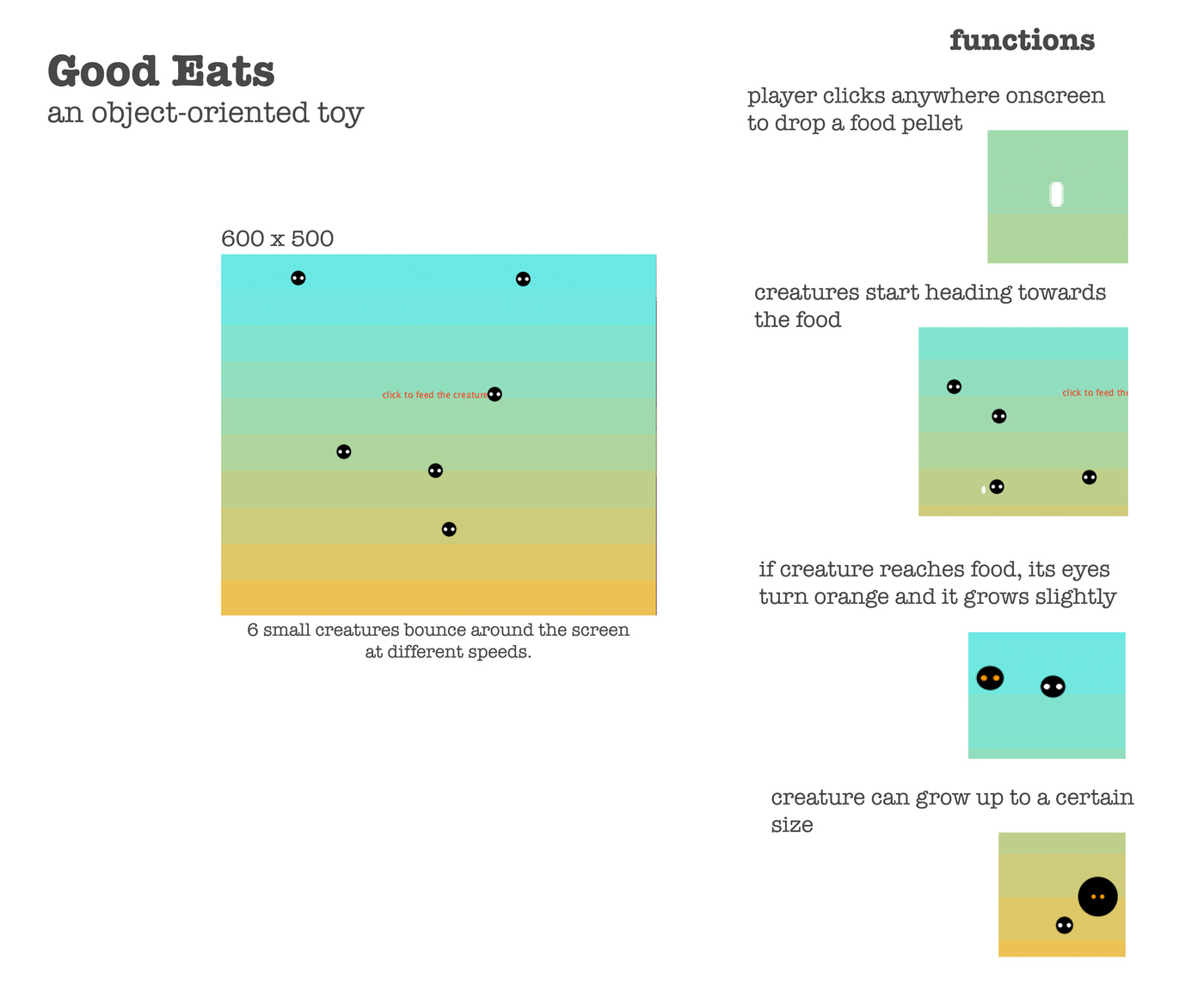
/* six round creatures bounce around the screen.
   click the mouse to drop a food pellet.
   the more you feed them, the more they grow! */

/* references:

  - format of the for loops used in creature and backdrop arrays based on car array
example from 9.7 in learning processing textbook

  - bounce function of creatures based on example from natureofcode chapter 1: vectors

  - PVector help from Nic

*/

Creature[] creatures= new Creature[6];
Food speck;
Backdrop b;

void setup() {

  size(600, 500);
  rectMode(CENTER);
  noStroke();

  b = new Backdrop();
  speck = new Food();

  // array of creatures with random starting positions and speeds

  for (int i = 0; i < creatures.length; i++) {
    creatures[i] = new Creature(random(0, 600), random(0, 500), random(0.5, 5));
  }

}

void draw() {

  // update

  speck.update();

  for (int i = 0; i < creatures.length; i++) {
    creatures[i].update();
  }


  // display

  b.display();

  for (int i = 0; i < creatures.length; i++) {
    creatures[i].display();
  }

  if (!speck.eaten) {
    speck.display();
  }
}
//gradient background
class Backdrop {
void display() {
background(113, 232, 228);
fill(255, 0, 0);
text("click to feed the creatures!", 225, 200);
for (int i = 0; i < 9; i++) {
fill(238, 192, 92, 10 + i*30);
rect(300, 75 + i*50, 600, 50);
}
}
}class Creature { //<>//
PVector position;
PVector velocity;
PVector randomDirection;
PVector directionToFood;
float speed;
int faceSize;
int eyeSize;
color eyeColor;
// constructor - starting values for position, speed, size, and color
Creature(float positionX, float positionY, float creatureSpeed) {
position = new PVector(positionX, positionY);
speed = creatureSpeed;
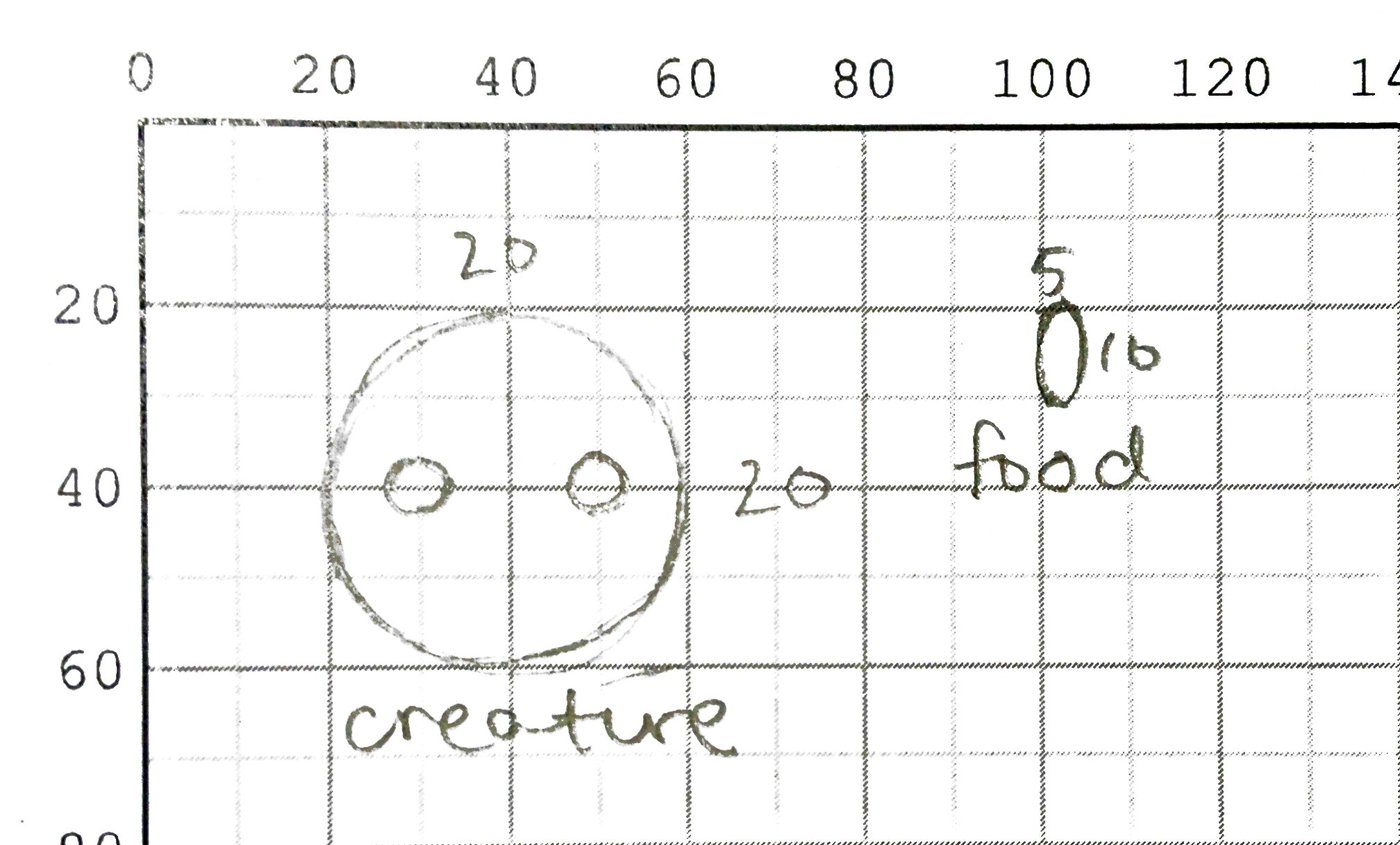
faceSize = 20;
eyeSize = 5;
eyeColor = color(255, 255, 255);
randomDirection= new PVector(random(0, 600), random(0, 500));
}
void update() {
// when there's no food onscreen
if (speck.eaten) {
// creatures bounce off edges
if ((position.x > width) || (position.x < 0)) {
randomDirection.x = randomDirection.x * -1;
}
if ((position.y > height) || (position.y < 0)) {
randomDirection.y = randomDirection.y * -1;
}
// creatures move in a random direction
directionToFood=randomDirection;
}
// when there IS food on the screen
else {
// so creatures can locate food position
PVector foodPosition = new PVector(speck.foodPositionX, speck.foodPositionY);
// creatures move toward food
directionToFood = PVector.sub(foodPosition, position);
/* if distance b/n food and creature is small enough
i.e. (creature is touching the food)
then food is eaten */
if (abs(speck.foodPositionX - position.x) < 2 && (abs(speck.foodPositionY - position.y) < 5)) {
speck.eaten = true;
// eye color changes
eyeColor = color(255, 150, 0);
// creature size will increase with food intake, up to 50
if (faceSize < 50) {
faceSize = faceSize + 1;
}
}
}
directionToFood.normalize();
velocity = PVector.mult(directionToFood, speed);
position.add(velocity);
}
void display() {
// creature face
fill(0);
ellipse(position.x, position.y, faceSize, faceSize);
//creature eyes
fill(eyeColor);
ellipse(position.x + 5, position.y, eyeSize, eyeSize);
ellipse(position.x - 5, position.y, eyeSize, eyeSize);
}
}class Food {
float foodPositionX;
float foodPositionY;
boolean eaten;
// constructor - set eaten to true as default so program starts with no food on screen
Food() {
eaten = true;
}
void update() {
// food appears at coordinates where mouse is pressed
if (mousePressed == true) {
foodPositionX = mouseX;
foodPositionY = mouseY;
eaten = false;
}
}
void display() {
// if food is eaten, set opacity to 0 - food appears to disappear
if (eaten) {
fill(255, 0);
rect(foodPositionX, foodPositionY, 5, 10, 20);
} else {
fill(255);
rect(foodPositionX, foodPositionY, 5, 10, 20);
}
}
}