Home-based Childcare and Center-based Childcare
Home-based childcare 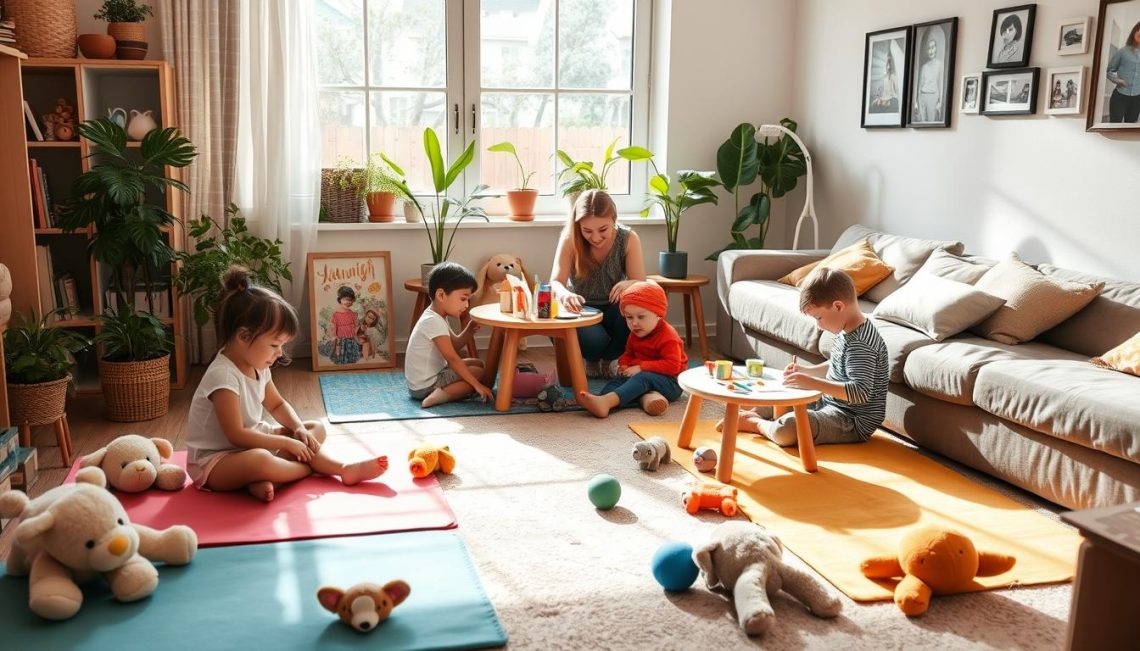 is a popular choice,
particularly for families with infants and toddlers. This type of care
typically takes place in a
caregiver’s home, offers flexible schedule, and a home-like environment.
Children often receive more individual attention which can help them
feel safe and supported.
is a popular choice,
particularly for families with infants and toddlers. This type of care
typically takes place in a
caregiver’s home, offers flexible schedule, and a home-like environment.
Children often receive more individual attention which can help them
feel safe and supported.
Research suggests that these characteristics can nurture strong emotional bonds between the caregivers and children, which are fundamental for early social and emotional development.
Center-based childcare offers a more structured and regulated approach. These programs usually have a daily schedule which includes organized learning activities, group play and routines.
Most of the center-based programs focuses on early learning skills like language development, problem-solving and social interaction. Teachers often use learning activities that are age-appropriate lessons in order for them to provide guidance in the learning process of a child and monitor the progress over time. Aside from academic skills, center-based child care also give emphasis to social and emotional growth, like teaching children how to share, cooperate with others, take turns and manage their emotions in a group setting.
Home-based vs. Center-based
| Factor | Home-based Childcare | Center-based Childcare |
| Environment | More comfortable, home-like setting | Structured, classroom style environment |
| Group size | Smaller groups, more individual attention | Larger groups with multiple children |
| Flexibility | More flexible hours and routines | Fixed schedules and set hours |
| Social Interaction | Limited interaction with fewer children | More opportunities for socialization |
| Cost | Often more affordable | Usually more expensive |
| Learning Structure | Less formal learning activities | Structured educational programs |
| Caregiver Attention | More personalized care | Shared attention among children |