What is Malware?
Malware stands for malicious software, the Government of Canada classifies it as a software that infects your computer so that cyber criminals can infiltrate or damage your system or device (Communications Security Establishment Canada, 2021).Malware comes in a variety of different forms which leads to combatting it being very difficult for victims.
Trojans are programs that are disguised as safe software installed onto the victim's machine, usually by the victim themselves. The trojan is named after the Greek Trojan Horse and follows a similar design philosophy. The software will often be disguised as another program that the victim intended to install, leading them to be tricked into compromising their system. Trojans are often included in phishing attacks, but they can also appear in a multitude of other locations. A popular way for criminals to bait potential victims is to disguise trojans as popular media that the victim would want to pirate and acquire for free. Once the victim installs the software it shows its true purpose.
Keyloggers are another form of malware, these programs embed themselves into a user's system. Once they are they begin to log all the victim's keystrokes and send it back to the sender. These keystrokes are often used for the attacker to gain access to important log-in information of the victim. Keyloggers are often much harder to detect than other forms of malware since their purpose is for them to be installed on your systems for extended periods of time, unnoticed.
Adware is another type of malware that functions similarly to trojans. Adware is usually included in other third-party software installed by the victim. Once the adware is on the system it will do a variety of things. The most common is the presence of ad popups while the computer is being used, these ads can show up in or out of the search engine and generally dodge traditional ad blocking software. The ads that appear due to adware are not always malicious and can sometimes advertise regular brands and items. However, adware is often used to make victims accidentally click the ads which can lead to further malware being installed on their system. Adware often installs or changes the default browser of the victim’s computer, leading to the owner of the browser receiving revenue and traffic from searches, these browsers are often difficult to change off without fully deleting the source of the adware.
Ransomware is a type of malware that installs onto a victim's system, once there it begins to hold the victim's files and information hostage and only begins to release them once a payment is made. Ransomware has the potential of being extremely dangerous for the victim, they lose the access to important files that can be critical for either their system functioning or ones that have negative impacts on their lives or career if they were to be lost forever. Ransomware is often designed to lie to the victim and will only continue to ask for more money even if they continue to pay.
Crypto miners are a newer form of malware that infect the victim's system and install crypto currency mining software on the system. These systems usually don't steal data from the user but exist to continuously perform complex equations and formulas that will generate crypto currency for the attacker which they can sell for a profit. This software usually slows down the victim's system significantly and will only get worse with time (Mohanta & Saldanha, 2020).
The most common defense against malware is to avoid downloading it in the first place. Sites that are offering pirated contact can often include malware, so acquiring the content that is wanted should be pursued elsewhere. Modern antivirus software will often detect malware before it is fully installed and quarantine it so it cannot infect the rest of the system.
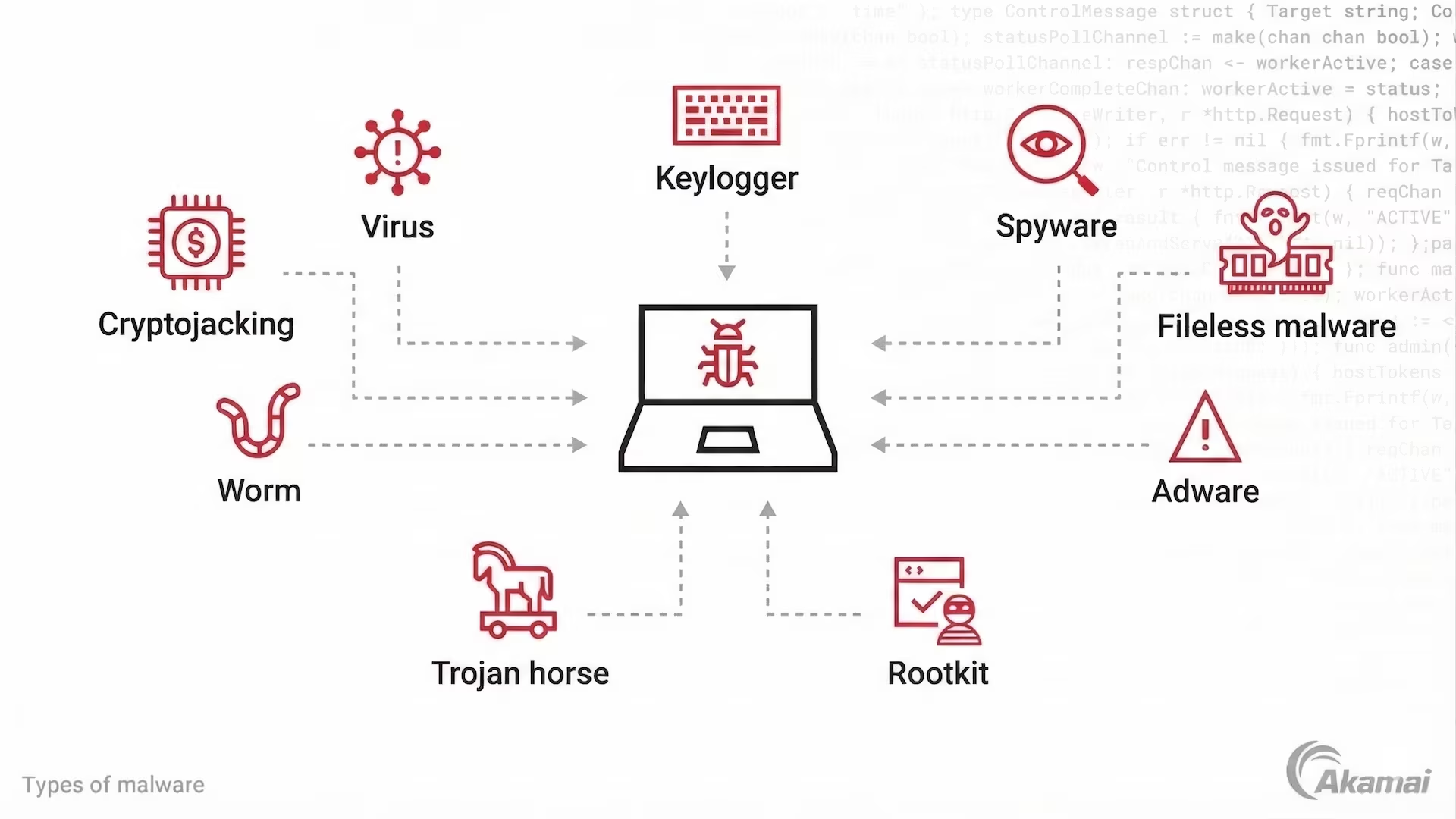
Types of Malware
- Trojans
- Keyloggers
- Adware
- Ransomware
Prevention
- Install antivirus software
- Avoid suspicious downloads
- Keep systems updated