Treatment Overview
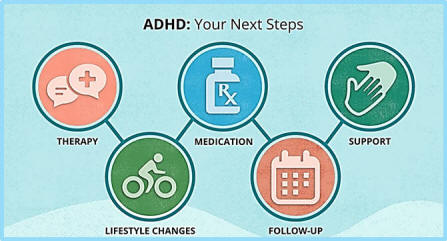
There is no cure for ADHD, however there are treatment options that help manage symptoms and improve daily functioning. The most effective treatment is medication, and behavioral therapy
Medication
Medication is the most common treatments for ADHD. Stimulant medications work by increasing dopamine and norepinephrine activity which helps improve attention and reduce impulsivity. Non-stimulant medications are alternatives for individuals that experience side effects.
-
Stimulants: methylphenidate, and amphetamines were the most prescribed medications.
-
Non-stimulants: atomoxetine and bupropion (antidepressant) are used when stimulants cause side effects or health issues.
Many practitioners recommend a combined approach of medication and non-medication strategies to manage symptoms effectively.
Behavior Therapy
Behavior therapy works best in combination with medication. It focuses on helping individuals manage aspects of ADHD through structured counseling and skill building techniques.
-
Helps manage daily routine and improves focus.
-
Supports impulse control and emotional regulation.
-
Works best along side medication and healthy lifestyle.
Lifestyle Management
Proper ADHD symptom management involves a healthy lifestyle, which enhances the effectiveness of therapy and medication.
-
Maintain healthy eating habits.
-
Engage in daily physical activity.
-
Getting sufficient sleep.
Combining medication, behavioral therapy, and healthy lifestyle habits provides the most effective approach to managing ADHD symptoms.