Superposition: Being in Many States at Once
In everyday experience, a coin is either heads or tails. In quantum mechanics, a qubit is like a coin spinning in the air. Until it is measured, it is not definitively in either state. It exists as a probability distribution across all possible states simultaneously. This is superposition.
When you perform a computation on a qubit in superposition, you are effectively performing that computation on all possible states of that qubit at once. With two qubits, you compute on four states simultaneously. With three qubits, eight states. With 300 qubits, you compute on more states simultaneously than there are atoms in the observable universe. This is the theoretical source of quantum computing's extraordinary advantage for certain problem types.
The critical caveat is that when you measure a qubit, superposition collapses and you get a definite answer. The art of quantum algorithm design lies in arranging computations so that the correct answer has the highest probability of being the one that emerges when you measure the system at the end of the computation.
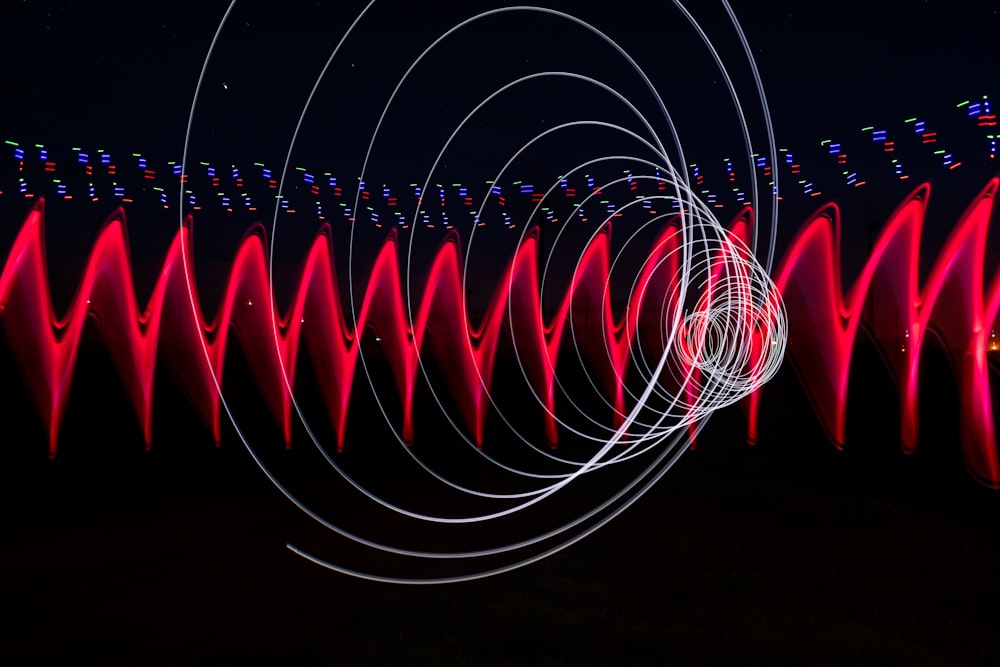
Quantum states can be visualised as waves that interfere constructively and destructively to produce outcomes | Photo: Unsplash
Entanglement
Quantum entanglement is a phenomenon where two or more qubits become linked so that the state of one instantly determines the state of the other, regardless of the physical distance between them. Albert Einstein famously called this "spooky action at a distance" and found it deeply uncomfortable.
In quantum computing, entanglement allows qubits to be correlated in ways that have no classical equivalent. Information about relationships between qubits can be encoded in the entangled state of the system as a whole, allowing quantum computers to process certain kinds of interconnected information far more efficiently than any classical machine. Entanglement is also essential to quantum communication protocols where it provides theoretically unbreakable encryption based on the laws of physics.
Quantum Interference
Quantum interference is the mechanism through which quantum algorithms steer computation toward correct answers. Like waves in water, quantum probability amplitudes can add together (constructive interference) or cancel each other out (destructive interference).
A well-designed quantum algorithm arranges computation so that paths leading to wrong answers interfere destructively and cancel out, while paths leading to correct answers interfere constructively and amplify each other. The result is that when you measure the system at the end, the correct answer emerges with high probability. This is what distinguishes a useful quantum algorithm from simply spinning many qubits at random and hoping for a good result.
Qubits and Quantum Hardware
Just as classical computers use transistors and logic gates to manipulate bits, quantum computers use physical qubits and quantum gates to manipulate quantum information. However, qubits are extraordinarily fragile. Any interaction with the environment can cause them to lose their quantum state through a process called decoherence, which is one of the central engineering challenges in building practical quantum computers today.
Physical Qubit Technologies
- Superconducting Qubits — Used by IBM, Google, and most major tech companies. Tiny circuits made of superconducting materials are cooled to near absolute zero to exhibit quantum behaviour. Currently the leading approach for building large-scale quantum processors
- Trapped Ion Qubits — Individual ions are trapped in electromagnetic fields and manipulated with laser pulses. Used by IonQ and Honeywell. These qubits have very long coherence times and high gate fidelity, but are harder to scale to large numbers
- Photonic Qubits — Use individual photons to carry quantum information. Have the advantage of operating at room temperature and transmitting quantum information over fibre optic cables
- Topological Qubits — A theoretical approach pursued by Microsoft that would encode information in a more inherently stable way, dramatically reducing error rates. Not yet demonstrated in working hardware at scale
The Decoherence Problem
Quantum error correction requires many physical qubits to reliably represent one logical qubit. Current estimates suggest that a fault-tolerant quantum computer capable of running Shor's algorithm against real encryption would require between one million and ten million physical qubits. Today's best machines have fewer than 1,200. This gap defines the near-term research agenda for the entire field of quantum computing.