The Anxious Brain

Contemporary scientific perspectives seek to explain both the psychological and physiological aspects of anxiety through underlying biological processes, including brain circuitry, neurochemical activity, and genetic factors (Horwitz, 2013).

"Anxiety and related disorders involve brain regions responsible for fear processing, such as the amygdala, prefrontal cortex, and hippocampus, as well as neurochemicals including GABA, epinephrine, dopamine, and serotonin." — Horwitz, 2013
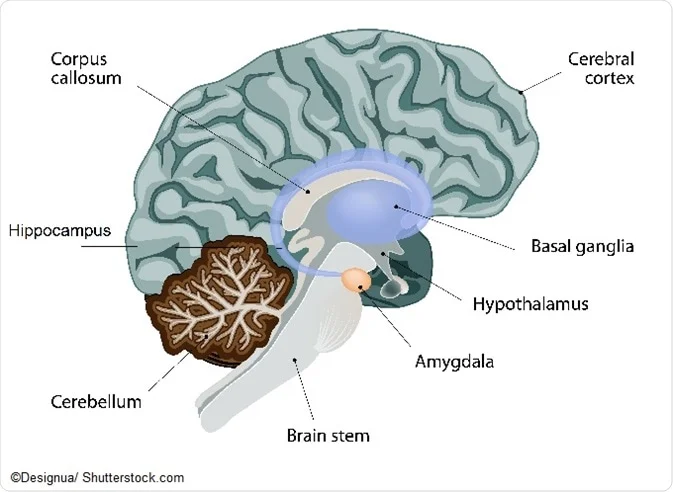
Anatomical diagram of the human brain labelling key regions involved in anxiety: the amygdala, hippocampus, cerebral cortex, hypothalamus, basal ganglia, corpus callosum, cerebellum, and brain stem
Figure 3: Key brain regions involved in anxiety disorders, including the amygdala and hippocampus. (©Designua / Shutterstock.com)

In the anxious brain, a critical imbalance occurs: the amygdala becomes hypersensitive while its regulatory connections with the prefrontal cortex weaken. The result is a flood of exaggerated fear responses that the rational mind struggles to control.
How the Anxious Brain Works

⚡ The Amygdala — The Alarm System

Becomes hypersensitive in anxiety disorders, producing excessive false alarms. It interprets harmless situations, comments, or perceptions as highly threatening — triggering a fear response even when there is no real danger.

🧩 The Prefrontal Cortex — The Regulator

Becomes less effective at inhibiting the amygdala's exaggerated fear responses. The rational brain's ability to say "this is not a real threat" is weakened, leading to persistent worry and intrusive thoughts.

🔍 The Hippocampus — Memory & Context

Helps store and retrieve memories of frightening events. In anxiety disorders, the hippocampus may encode fearful memories too strongly, making past threats feel ever-present.

💔 Pain Response Overlap

Continuous activation of stress responses stimulates brain regions responsible for processing physical and emotional pain. Anxiety can feel neurologically similar to physical pain (Azab, 2018).

Neurochemicals Involved in Anxiety

Neurochemical imbalances play a key role in the development and maintenance of anxiety disorders. The following brain chemicals have been identified as central to the anxiety response:

Table 3: Neurochemicals and their role in anxiety disorders
Neurochemical Normal Role Role in Anxiety
GABA Inhibits nerve activity; promotes calm Low GABA = heightened excitability and anxiety
Serotonin Regulates mood, sleep, appetite Imbalance linked to mood disorders and anxiety
Dopamine Reward, motivation, pleasure Dysregulation affects fear and avoidance behaviour
Epinephrine Fight-or-flight stress response Excess causes racing heart, sweating, and panic

Anxiety disorders symptoms most often start during childhood, puberty, or early adulthood. Early life experiences, academic pressure, peer relationships, family environment, and exposure to stressful events may all contribute (Craske & Stein, 2016).

Signs & Symptoms

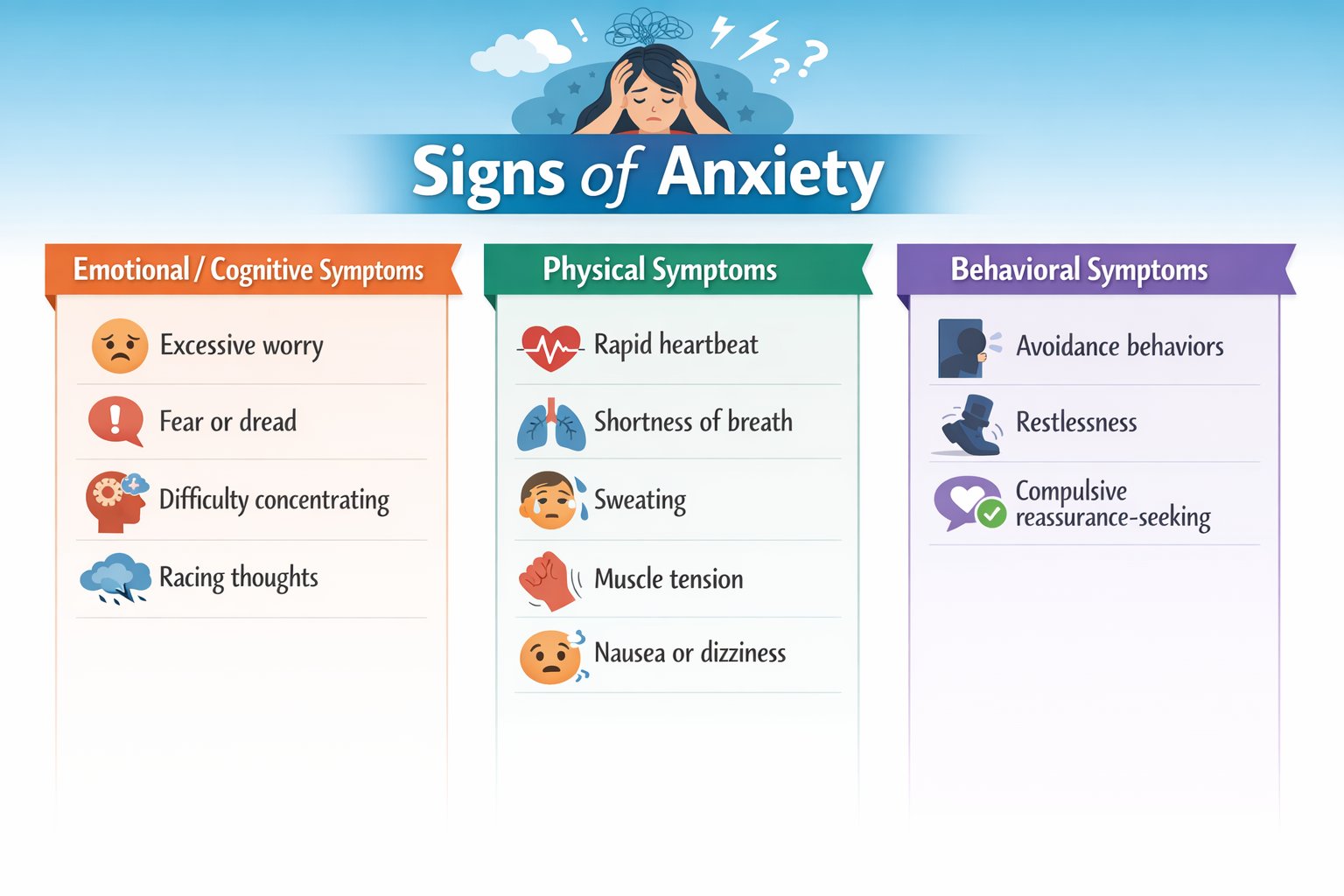
Anxiety disorders are categorized by classical symptoms such as extreme worry, fear of performance, antisocial behaviour, sudden panic attacks, and avoidance behaviors. They are also associated with a range of physical symptoms.

🧠 Psychological Symptoms

  • Extreme, persistent worry or fear
  • Panic attacks
  • Avoidance of situations or places
  • Intrusive or obsessive thoughts
  • Difficulty concentrating
  • Irritability and restlessness

💓 Physical Symptoms

  • Heart palpitations
  • Shortness of breath
  • Dizziness or lightheadedness
  • Muscle tension and aches
  • Sleep disturbances
  • Excessive sweating or trembling
Infographic titled Signs of Anxiety showing three categories: Emotional and Cognitive Symptoms (excessive worry, fear or dread, difficulty concentrating, racing thoughts), Physical Symptoms (rapid heartbeat, shortness of breath, sweating, muscle tension, nausea or dizziness), and Behavioral Symptoms (avoidance behaviors, restlessness, compulsive reassurance-seeking)
Figure 4: An overview of the emotional, physical, and behavioral signs of anxiety disorders.

How Is Anxiety Diagnosed?

A diagnosis for an anxiety disorder is based on several clinical factors. Medical intervention is considered necessary when symptoms cause overwhelming distress and impairment in daily functioning for more than 6 months.

Diagnostic Criteria Include:

  1. The severity of anxiety symptoms
  2. The frequency with which symptoms occur
  3. The persistence of symptoms over time
  4. How much symptoms interfere with daily life (work, relationships, self-care)
Contacting a health care specialist, like a family doctor or a licensed therapist, is an important first step. No one should self-diagnose or deal with an anxiety disorder on their own. — Health Quality Ontario, 2025

What Causes Anxiety Disorders?

Anxiety disorders can be caused by many different factors. Research shows that these conditions are linked to disrupted brain function and a combination of the following:

Explore Treatment Options →