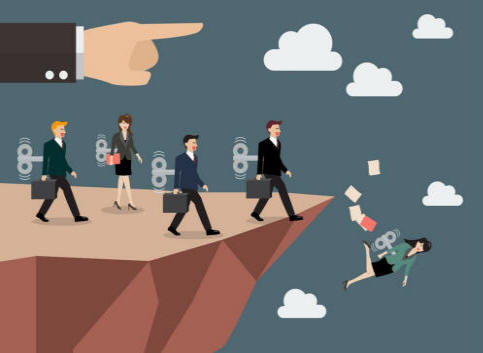
Impacts of Glass Ceiling
The glass ceiling has significant effects on individuals, organizations, and society as a whole. These impacts go beyond career limitations and influence broader social and economic outcomes.
Individual Impact
One of the most direct effects of the glass ceiling is limited career progression. Many individuals possess the education, skills, and experience needed for leadership roles but still face obstacles that prevent them from advancing.
These barriers are often more visible at higher levels, where promotion criteria may be unclear or subjective. As a result, individuals may remain in mid-level positions for longer periods, reducing their opportunities for growth and leadership development.
Organizational Impacts
Organizations that do not address the glass ceiling risk losing valuable talent and diverse perspectives. Employees who feel that advancement opportunities are limited are more likely to leave and seek better opportunities elsewhere.
This can lead to higher recruitment and training costs, as well as a loss of institutional knowledge. In contrast, diverse leadership teams have been shown to improve decision-making, innovation, and overall organizational performance.
Societal Impacts
The effects of the glass ceiling extend beyond the workplace and impact society as a whole. By limiting access to leadership roles, it reinforces social inequality and restricts opportunities for certain groups.
When leadership positions are held by a limited population, power and influence remain concentrated, which can shape economic, political, and social systems in ways that maintain inequality.
Impact of Wage Inequality
The glass ceiling also contributes to wage inequality. When women and marginalized groups are underrepresented in senior leadership roles, they have less access to higher salaries, bonuses, and long-term financial benefits.
This leads to lower lifetime earnings and affects financial security, including retirement stability and economic independence. Over time, these inequalities contribute to broader economic disparities within society.
| Main Effect | ||
| Area | What Happens | Why it Matters |
| Individuals | Career progression slows down or stops at mid level positions. | Leadership growth and advancement opportunities become limited. |
| Organizations | Workplaces lose talent, experience, and different perperctive. | Innovation, decision-making, and performance can be affected. |
| Society | Power and influence remain concentrated in a limited group. | Social and economic inequality continue across systems. |
| Wages | Access to senior-level pay and long term financial rewards is reduced. | Lifetime earnings, retirement, security, and independence are affected. |