Calories In, Calories out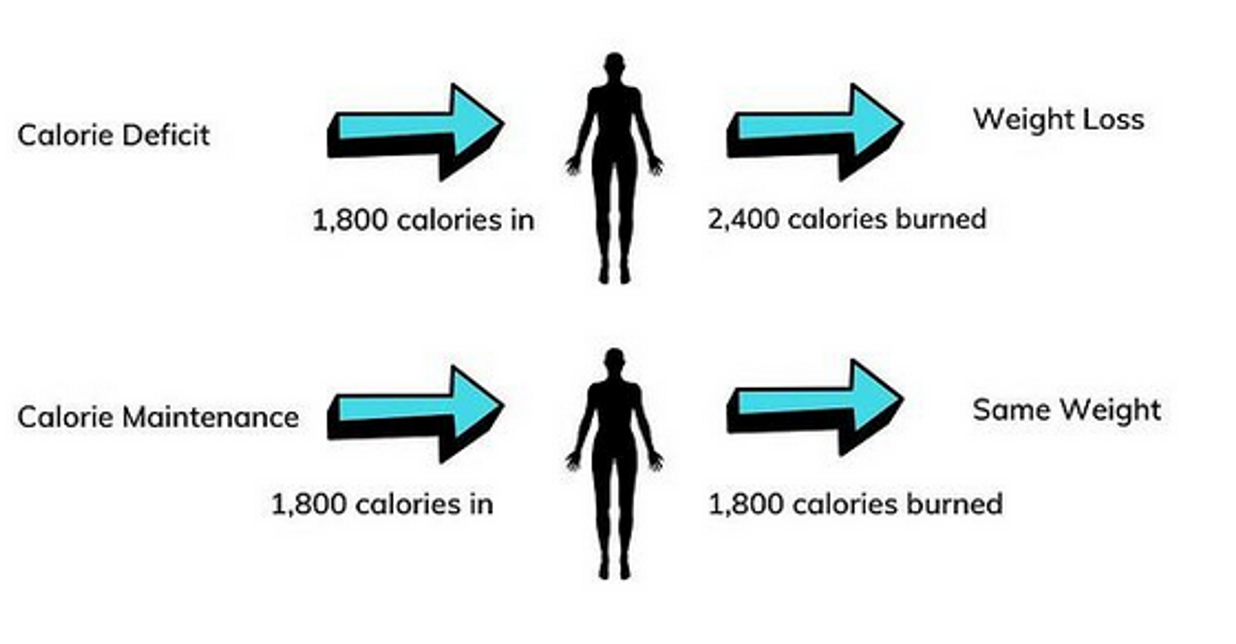
What are calories and
what do they do for you? Calories are in everything as they’re basically
the unit of every that is measured in food this includes food and drinks
for example if you were to consume 250 calories of cookies your body
will use those 250 calories for energy but what if I were to eat 3000
calories of food? and how would my body react to the high calorie
consumption? Well to start off how many calories does the average daily
person need? Well, it varies through lifestyle, size, muscle mass and
gender, a typical male needs 2500 calories while a female needs 2000.
And in every pound of body fat there is 3500 calories The truth about
calories. (2015). So, in essence if you were to consume 3000 calories of
food that excess number of calories turns into fat which will result in
weight gain = gaining fat, but how does your body use/burn its calories?
Most of it comes from your metabolic rate to 60-70 percent through
regulating body temperature, brain function, breathing your heart,
beating things that require to keep your body alive the other is their
thermic effect of food, which is digestion and physical activity such as
walking, fidgeting and or even standing and sitting. The truth about
calories. (2015). So, with that out of the way essentially if you were
to consume less than say you maintenance of 2500 calories, you will lose
weight. But what are the other effects of calorie restriction/Deficit?
Well, a calorie deficit is probably one of the most studied and robust
interventions known to increase lifespan and health and is also known to
delay age-related diseases Napoleão, A., Fernandes, L., Miranda, C., &
Ana, P. M. (2021) so what is a healthy amount of a calorie deficit and
how should it be applied? A healthy amount should be 25-30% reduction of
calorie intake example if you burn 2500 you should at most be only
consuming 1875 calories to reach that 30 percent baseline, but how does
this support increase of lifespan and health? These factors are increased
insulin sensitivity, reduced levels of anabolic hormones and increase
levels of hormones that suppress inflammation such as adiponectin and
cortisol. which are all proven by the biological mechanisms listed above
through a calorie deficit Napoleão, A., Fernandes, L., Miranda, C., &
Ana, P. M. (2021). However there is insufficient evidence to support
long-term CR as there have only been Short-Mid period studies on people
more research is needed to recommend long-term effects but despite the
lack of long-term studies there are proven negatives through a calorie
deficit, such as even Risk of Malnutrition, reduce levels of red blood
cells, lean muscle mass loss, and isn’t recommended for leaner people
who are actively trying to be in a deficit for a long periods of time.
Napoleão, A., Fernandes, L., Miranda, C., & Ana, P. M. (2021).
But all of this can be avoided with the research of the
macronutrients the daily body need and incorporating it into your
calorie deficit!
Click here for source