Gods of Power
HADES
The god of the dead, and the king of the underworld – Hades, as recorded in legend was not part of the Twelve Olympians. His palace was deep beneath the earth, in the realm of the dead, also known as Tartarus. The ancient Greeks believed that all souls would eventually arrive in Tartarus. Each soul would then be taken to stand trial before the three judges of death, where they awaited their fate. Hades and his wife Persephone (the queen of the underworld), grew tremendously rich because of all the rick minerals, gold, silver, and other valuable metals that lay underground (Graves, 1961, pp. 22-25).
Tradition holds that Hades had fallen in love with his niece Persephone, the daughter of Zeus and Demeter. He had asked Zeus for his permission to marry her, and Zeus agreed, but did not tell Demeter or Persephone about the proposal and subsequent marriage. Hades then carried her off in his horse and chariot, the young goddess cried out, screaming for help and begging to be set free (Graves, 1961, pp. 17-19).
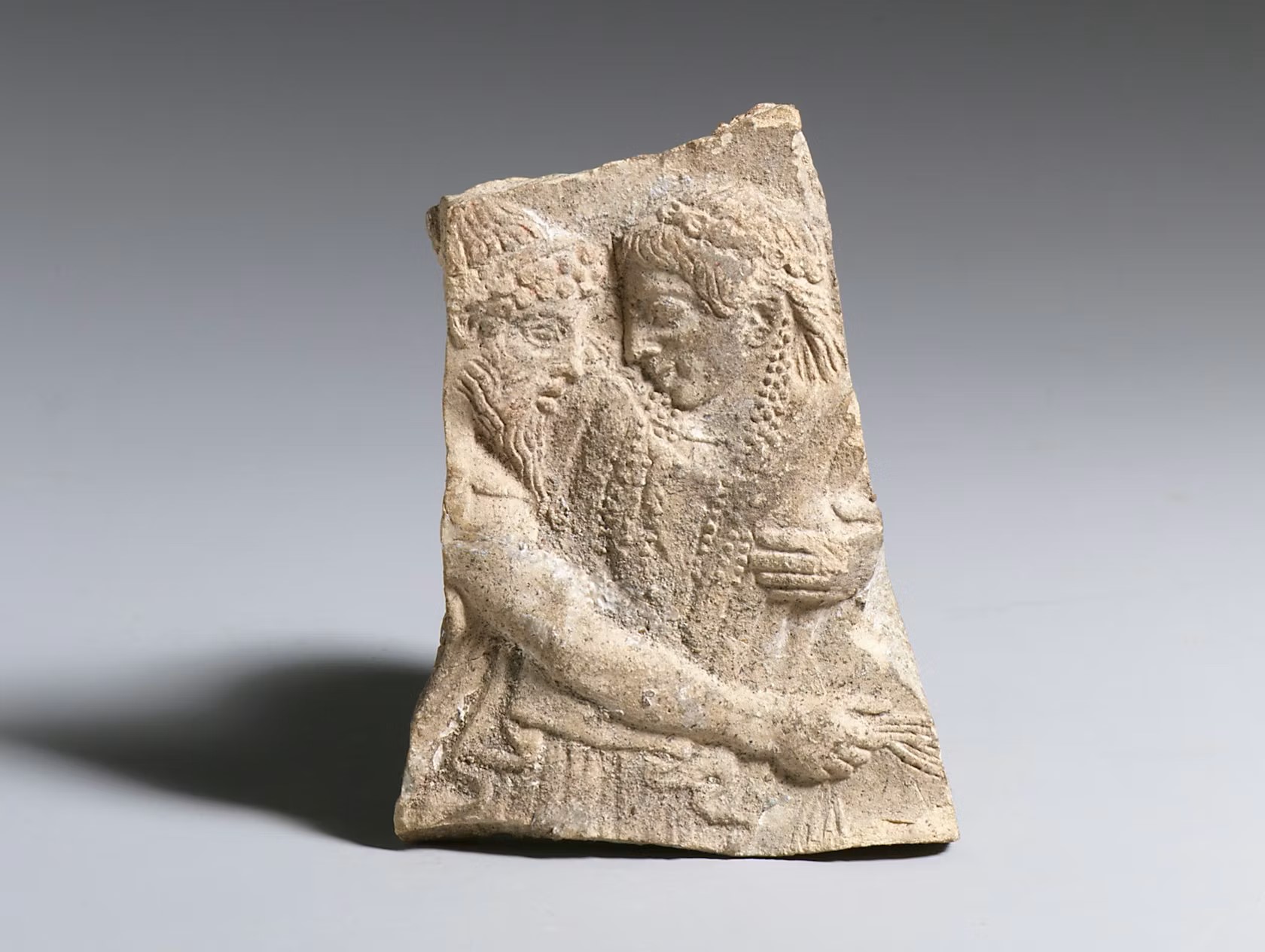
Hades Abducting Persephone
HERA
Queen Hera was the sister and wife of Zeus, and the only goddess mentioned in this category. She was greatly respected and honoured among morales, and even among the Olympians – she was revered. She was the goddess of marriage and women, and venerated as the protector of women during labor. Her marriage with Zeus was marked with countless turmoil and public disgrace, as he would have numerous affairs with various goddesses, nymphs, and even mortal women. Zeus’ actions deeply hurt and enraged Hera (Graves, 1961, pp. 7-9).
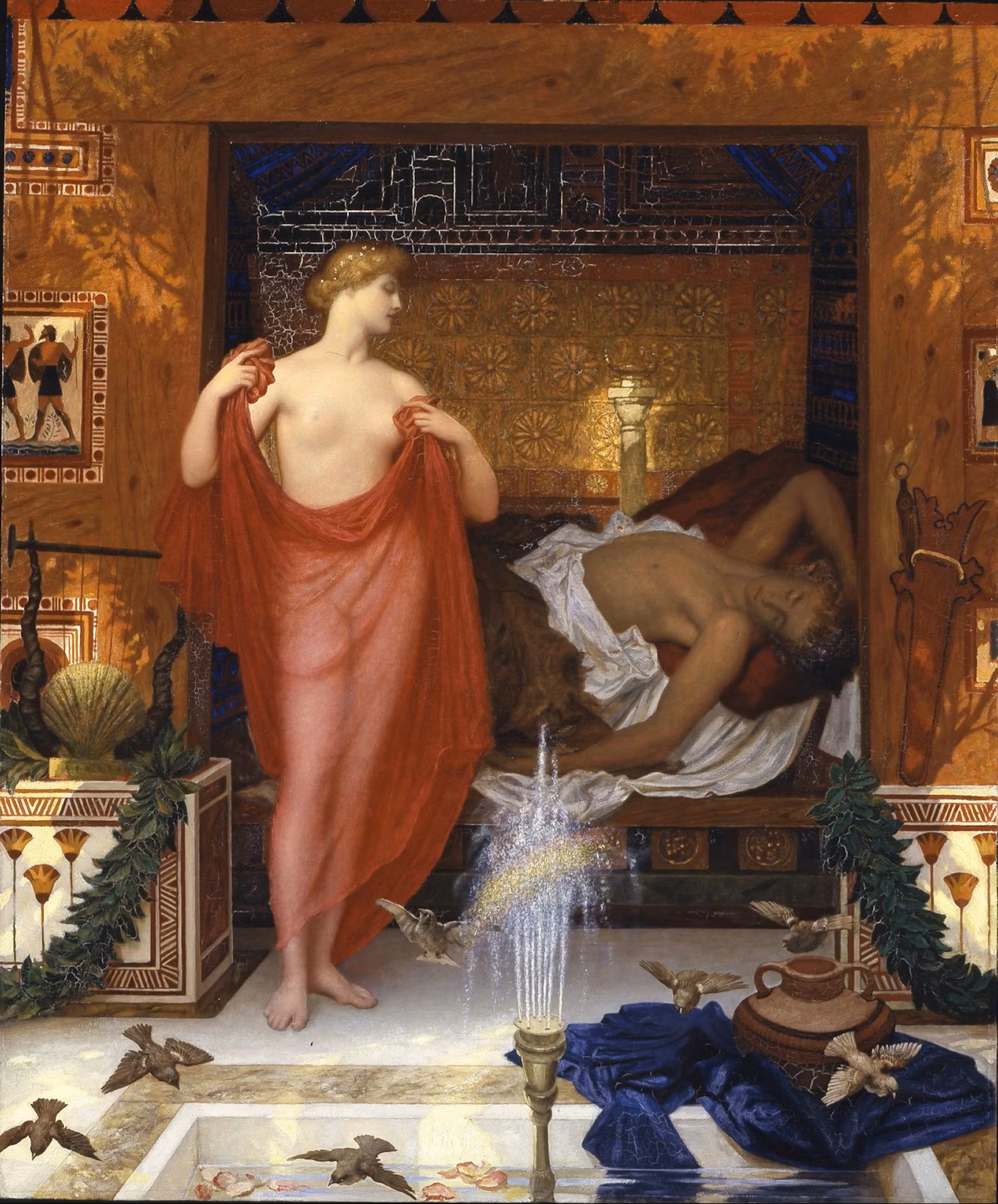
Hera in the house of Hephaistos
The myth surrounding Zeus and Hera’s marriage is quite fascinating. Zeus had asked for her hand in marriage for three hundred years, and each time the goddess refused him. Legend tells us, Zeus had disguised himself as a bird caught in a thunderstorm. Hera, not seeing through his disguise, took pity on the poor bird and let him in. While she was caring for the bird, the thunder god changed back into his true form, and from that point on she accepted. No matter how many times Zeus dishonoured her, she stayed married to him. The queen felt an obligation to set an example to the other gods, as well as mortals to be the exemplary image of a wife (Graves, 1961, pp. 7-9).
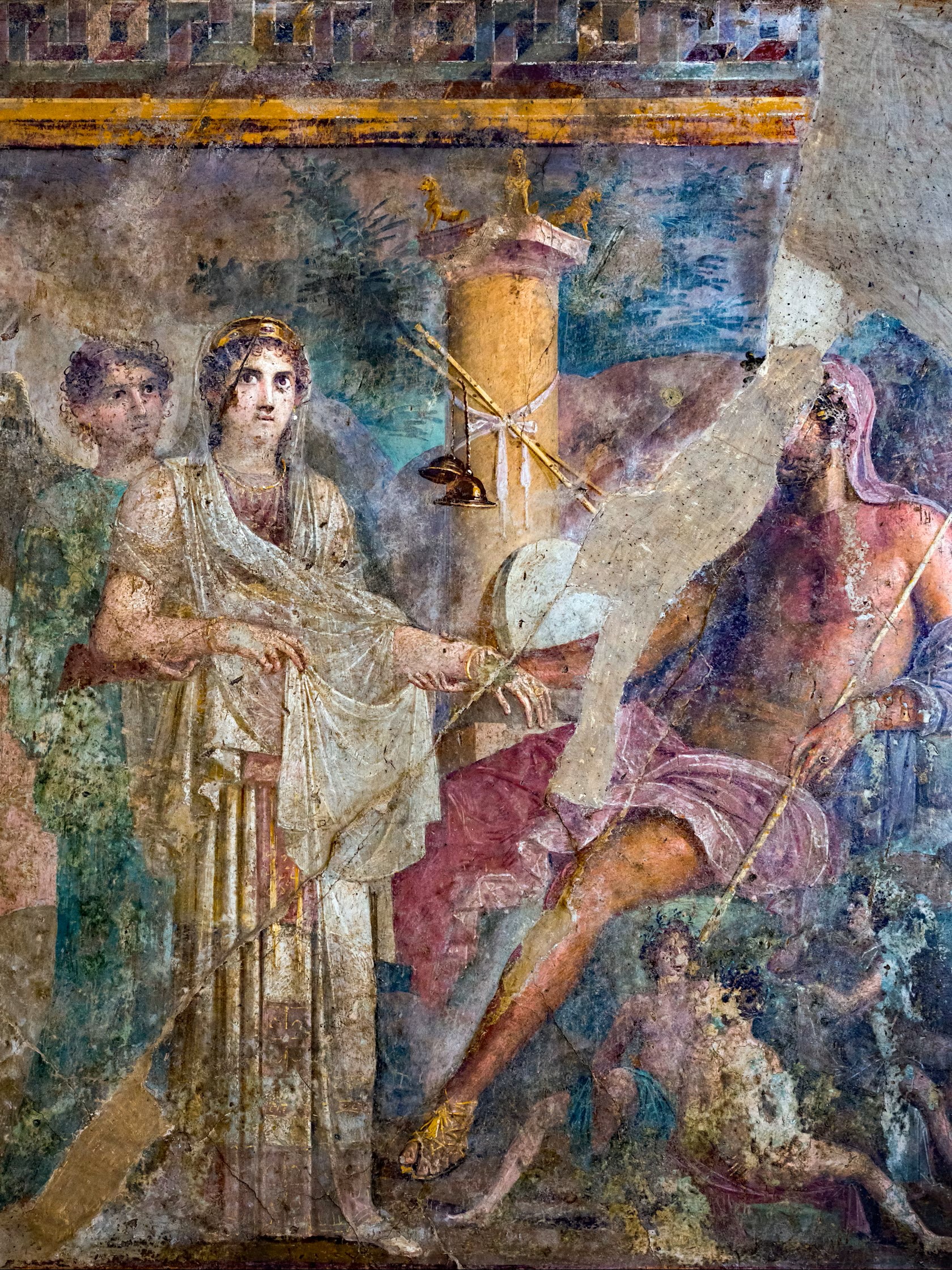
Marriage of Zeus and Hera
As recounted in a prominent legend, Zeus had an affair with a Theban princess, and would later produce a son, Heracles. Hera upon finding this out, was filled with anger and rage towards Zeus and his child. As vengeance, the queen sent two snakes to kill the newborn while he was sleeping. Heracles caught the snakes by their throats and strangled them, foreshadowing his strength and legendary status (Graves, 1961, pp. 59-61).
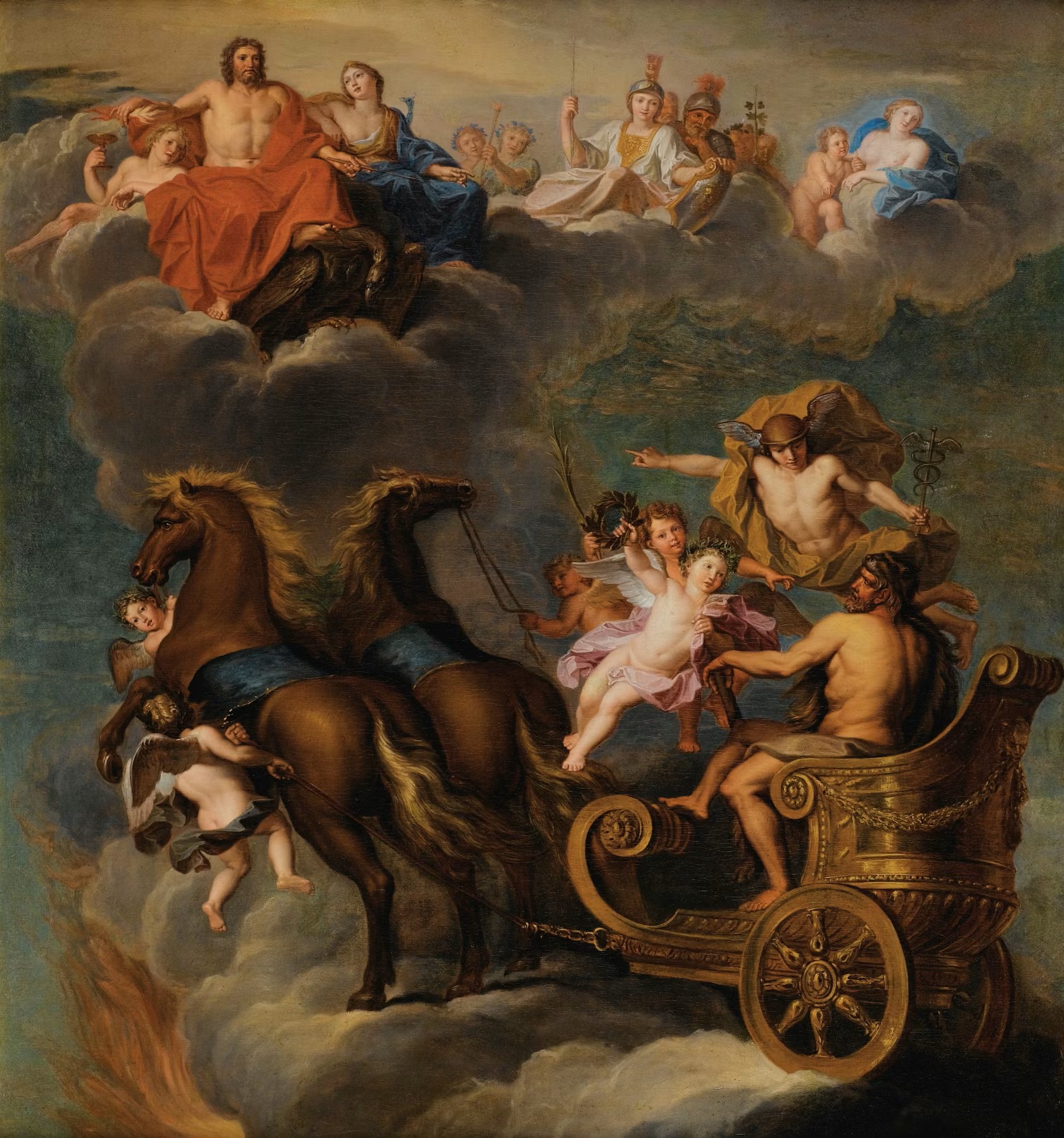
The Apotheosis of Hercules
POSEIDON
The god of the seas was one of the principal Olympians. Poseidon is often depicted through art as holding a trident, his weapon for choice. He used his trident to control the seas and cause sever storms and floods (Graves, 1961, pp. 7-9).
-seated-next-to-apollo-and-artemis.jpg)
East Frieze of the Parthenon depicting
Poseidon
ZEUS
He was the king of the gods and ruler of the sky and heavens, thunder and lighting, as well as law, order, and justice. No other deity in the Greek Pantheon was as powerful or influential as Zeus. He was arguably the most reconcilable god in ancient mythology (Graves, 1961, pp. 7-9).
was honored as the great “father-protector” of god and man. He was all-seeing and all-knowing, a wellspring of knowledge and divination. He was filled with generous compassion when it suited him and righteous and vindictive cruelty when angered. He was the great judge and final arbiter of the divine and the mundane. He was the supreme being.
Source: Lee (2013), p.17
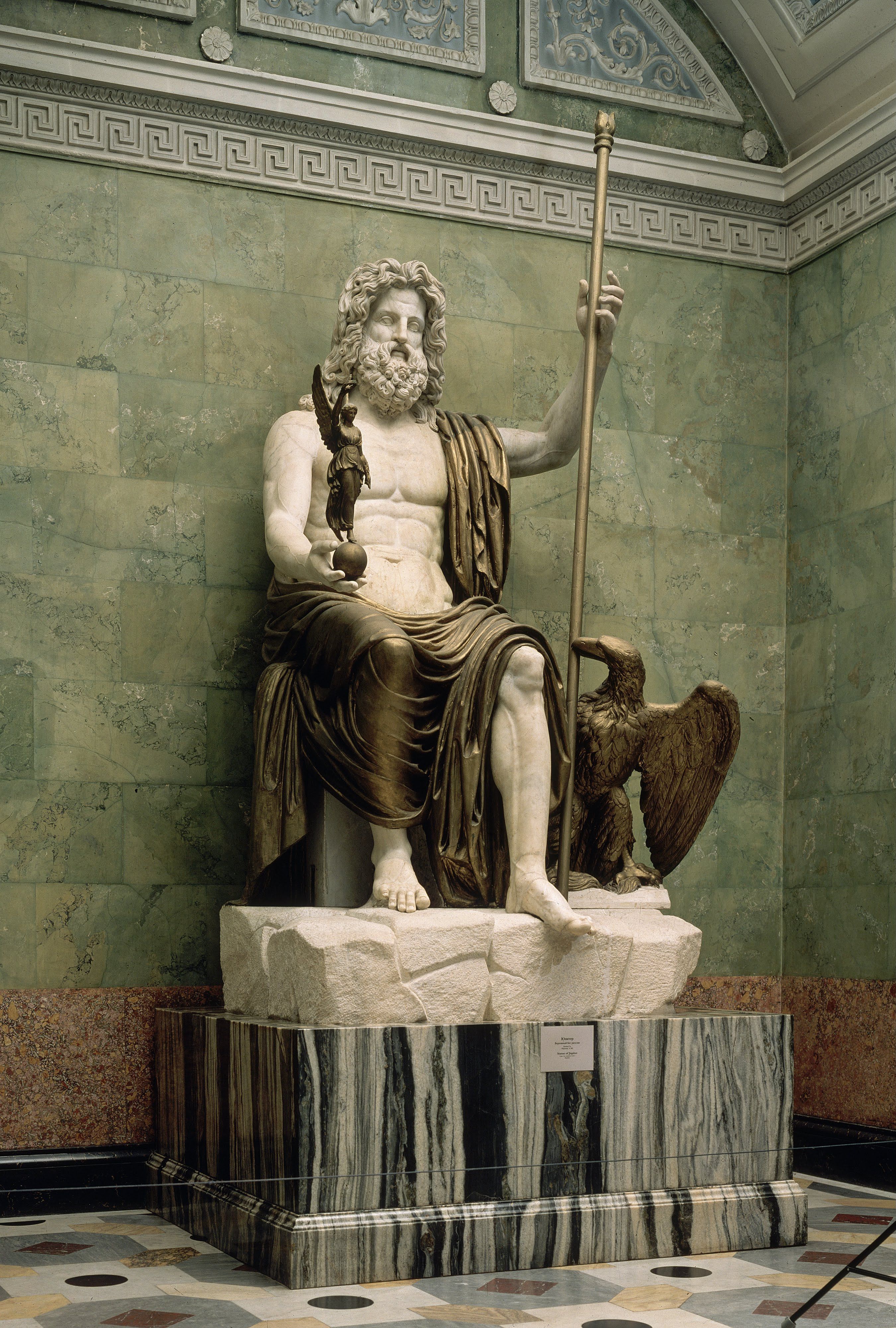
Statue of Zeus at Olympia
In Greek Mythology, Cronus, the god of time and leader of the Titans (the second generation of gods), was the father of Zeus. According to the oldest traditions, Cronus was a cruel and cannibalistic father – devouring his own children out of fear. Eventually, Zeus with the help of his brothers Poseidon and Hades, defeated Cronus and imprisoned him on an island in the Atlantic. After their victory, the three brothers drew lots to determine which part of their father’s kingdom they would have dominion over (Graves, 1961, pp. 7-9).
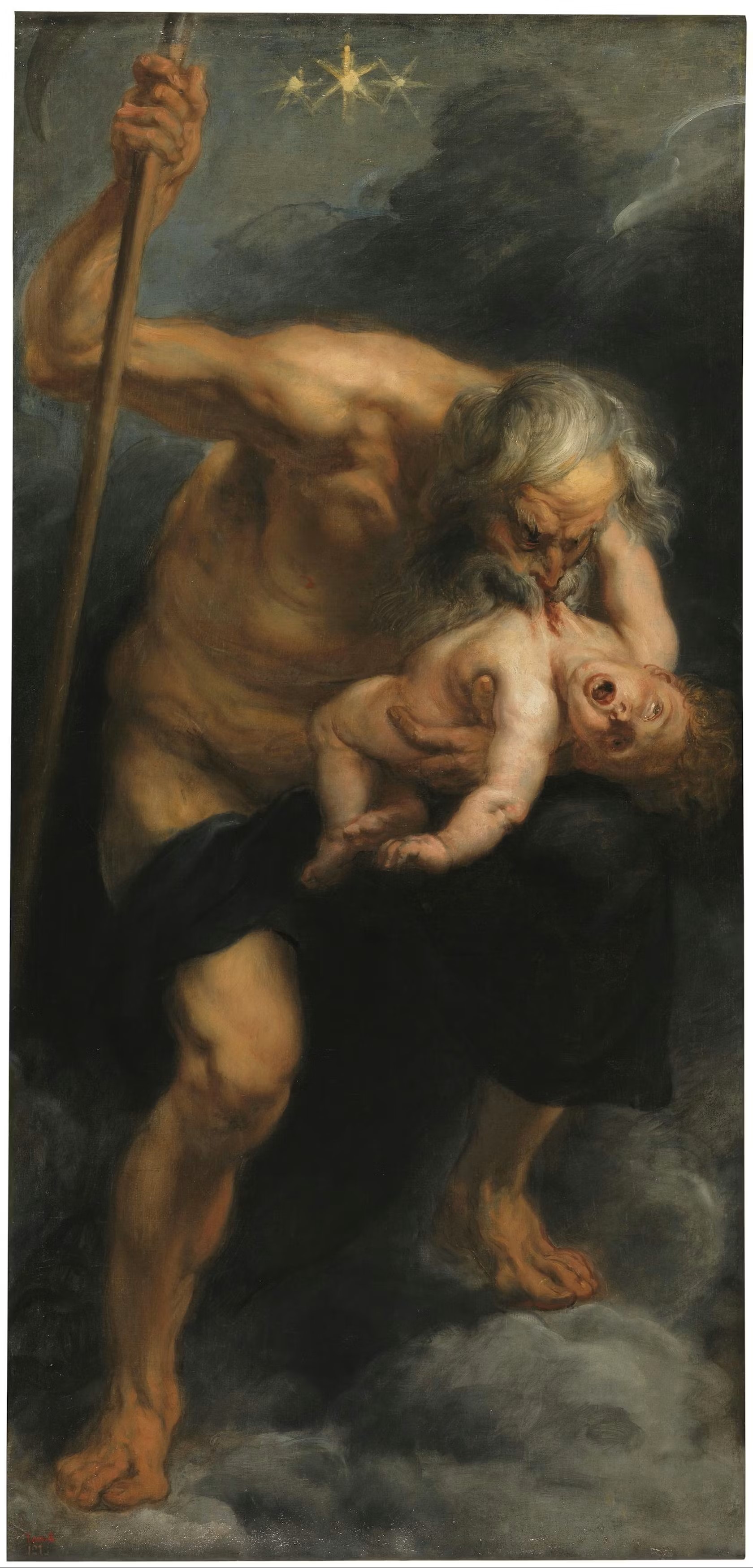
Saturn (Cronus) Painting
This war between father and sons spanned multiple generations of gods, illustrating that such conflicts are as ancient as the pantheon itself. Cronus fought and defeated his father Uranus, the personification of the sky. Cronus would eventually marry his sister, Rhea, the mother goddess and give birth to six deities: Demeter, Hades, Hera, Hestia, Poseidon, and Zeus. Just like his father, Cronus, too, feared being overthrown by his own offspring, and thus continued the barbaric tradition of devouring his children as soon as they were born. However, Rhea fooled Cronus by giving him a stone disguised as her newborn. Rhea sent her newborn (Zeus) to the island of Crete, where he was safe from his father's evil fate (Lee, 2013, p. 13). Before the age of the Olympians, and the reign of the Titans, there were the primordial beings – Uranus and Gaia. Gaia was the personification of the Earth and of creation itself (Lee, 2013, p. 5).
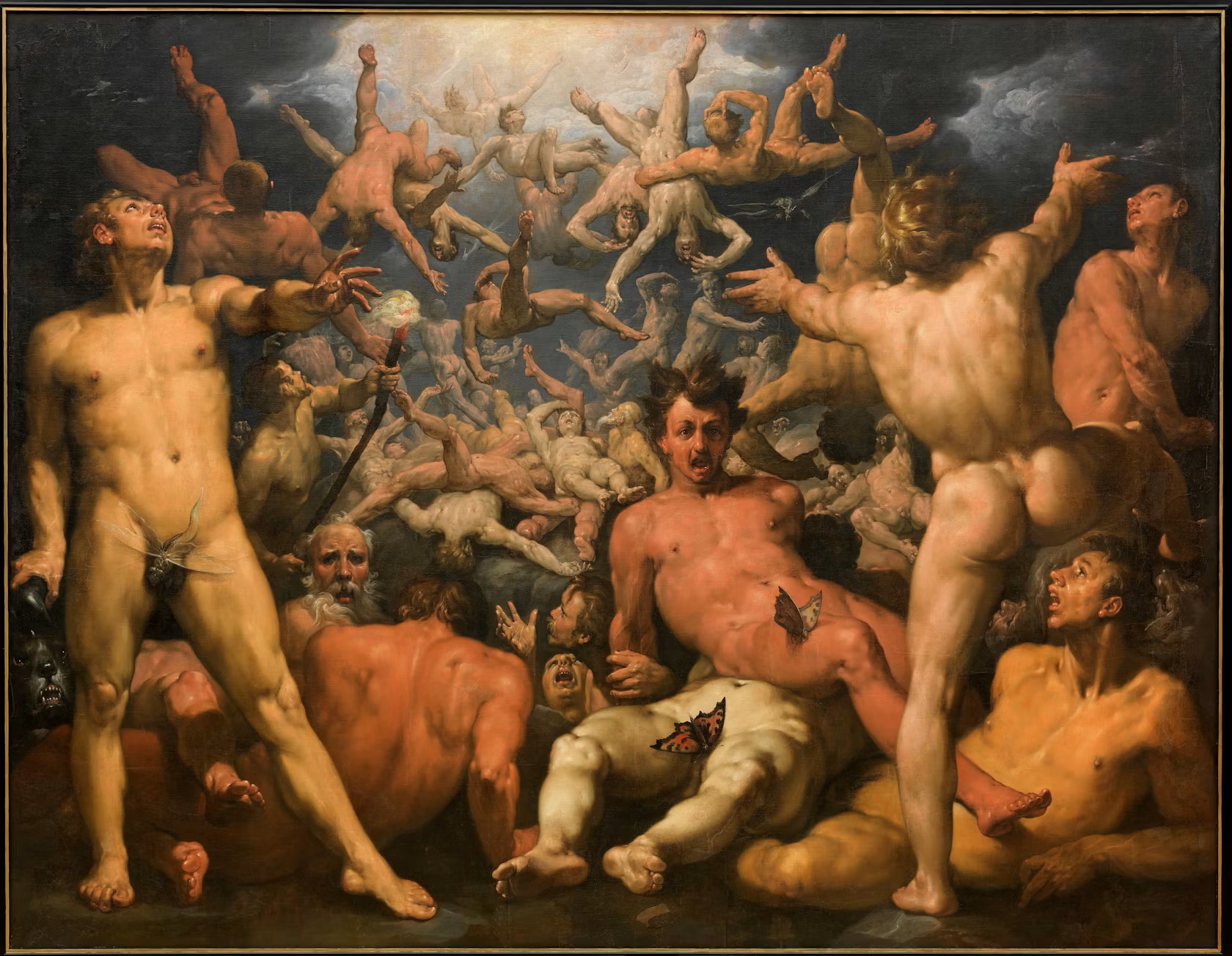
The Fall of the Titans
To the ancient Greeks, there was no god or goddess comparable to Zeus. He fought to secure his place as the king of the gods. Upon defeating Cronus, Zeus gave rise to the next generation of deities – the Olympians.
Zeus’s descendants bolster his already-considerable strength. He lets his sons and daughters act in his place. He himself, from the time of his victorious wars against the Titans and Giants, intervenes in events only sporadically. By limiting his direct intervention, he preserves both the dignity of his supreme authority and his identity as the embodiment of justice, standing on high above all parties in conflict.
Source: Simon (2021), p.12
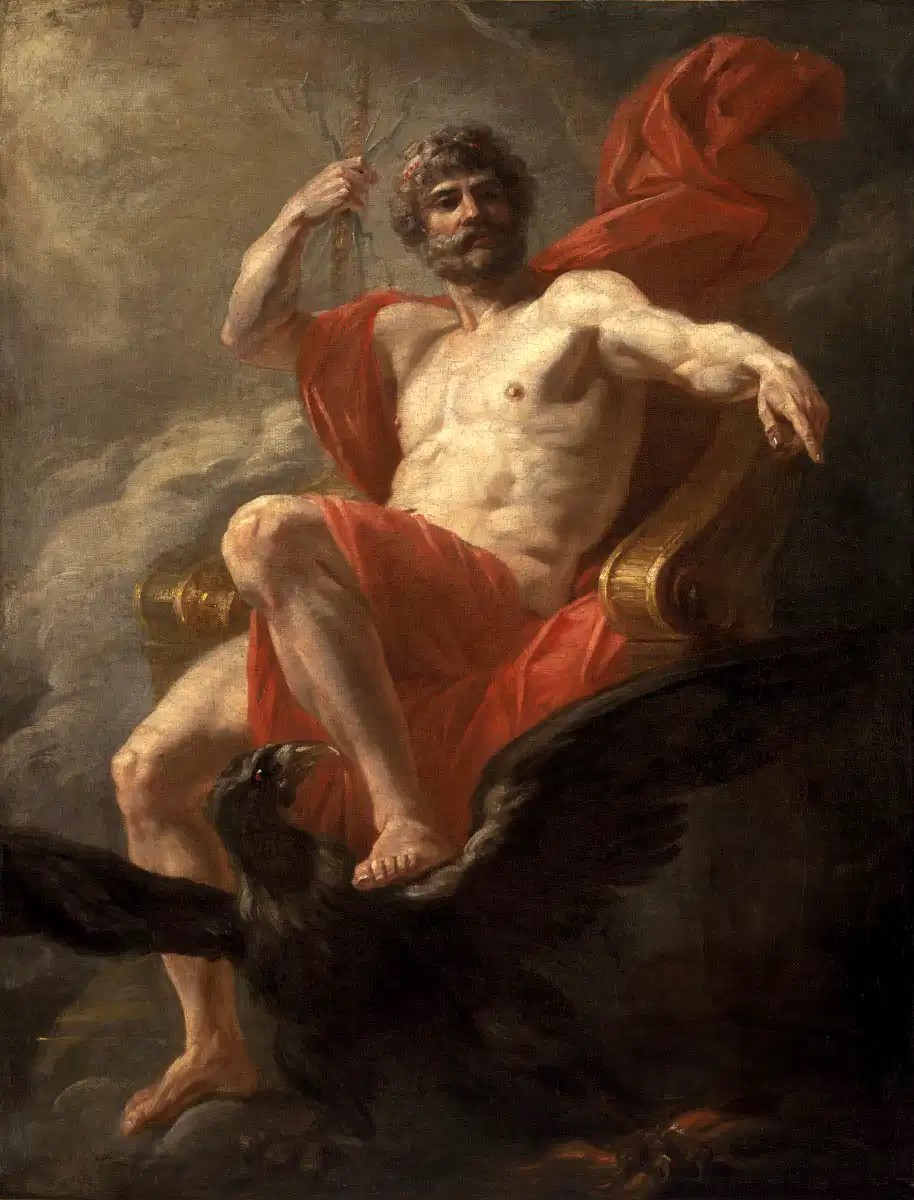
Enthroned Zeus Painting