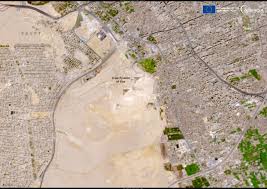
Pyramids and Monumental Architecture
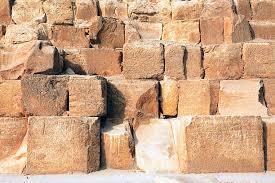
The Great Pyramid of Khufu — c. 2560 BCE (Source: Digital Giza Project)
Ancient Egyptians built some of the most enduring monuments in history. The pyramids at Giza — including the Great Pyramid of Khufu — are architectural marvels demonstrating advanced engineering and precise planning. These pyramids served as royal tombs designed to ensure the pharaoh's successful transition to the afterlife.
The Great Pyramid of Khufu, completed around 2560 BCE, originally stood at 146.5 metres (481 feet) tall — the tallest human-made structure on Earth for over 3,800 years. It contains approximately 2.3 million stone blocks, each weighing between 2.5 and 15 tonnes.
The evolution of Egyptian funerary architecture began with mastabas — rectangular tomb structures — before evolving into the step pyramids, and then the smooth-sided pyramids of the Old Kingdom.
Evolution of Egyptian Funerary Architecture:
- Mastaba Tombs (c. 3100 BCE) — Flat-roofed rectangular structures, built over underground burial chambers
- Step Pyramid of Djoser (c. 2650 BCE) — First pyramid, designed by architect Imhotep; six stepped levels
- Bent Pyramid of Sneferu (c. 2600 BCE) — Transitional design showing change in angle mid-construction
- Red Pyramid of Sneferu (c. 2590 BCE) — First true smooth-sided pyramid successfully completed
- Great Pyramid of Khufu at Giza (c. 2560 BCE) — Pinnacle of pyramid construction
| Structure | Date Built | Location | Significance |
|---|---|---|---|
| Great Pyramid of Khufu | c. 2560 BCE | Giza | Tallest structure on Earth for 3,800 years; one of the Seven Wonders |
| The Sphinx | c. 2530 BCE | Giza | Largest monolithic statue in the world; 73 m long |
| Karnak Temple Complex | c. 2055–100 BCE | Luxor (Thebes) | Largest ancient religious complex ever built; built over 2,000 years |
| Abu Simbel | c. 1264 BCE | Nubia (Southern Egypt) | Two rock-cut temples built by Ramesses II; astronomically aligned |
| Luxor Temple | c. 1400 BCE | Luxor | Major religious complex built by Amenhotep III and Ramesses II |
Engineering and Planning
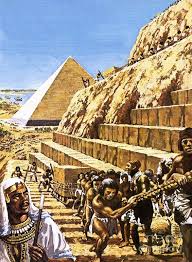
Reconstruction of pyramid construction methods (artistic interpretation)
Many scholars have studied the engineering methods behind pyramid construction. While the exact techniques remain debated, evidence suggests a large, organized labor force using ramps and sleds to move heavy stones. Workers were organized into named gangs and received regular wages of food, beer, and clothing.
Some studies investigate the astronomical alignment of pyramid complexes, indicating that Egyptians combined engineering with cosmological symbolism. The Great Pyramid is aligned to within 0.05 degrees of true north — a remarkable feat without modern tools.
Key Engineering Techniques Used:
- Ramp systems — Straight, spiral, or internal ramps to raise stone blocks
- Wooden sleds — Wetted with water to reduce friction over sand
- Plumb bobs and set squares — Achieved precise right angles and levelness
- Astronomical observations — Used star alignments to orient structures precisely
- Water canals — Used the Nile flood season to transport massive stone blocks close to construction sites
The Hieroglyphic Writing System
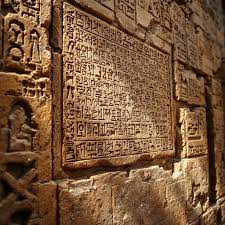
Hieroglyphic carvings — sacred script of Ancient Egypt
The Egyptian hieroglyphic writing system was both practical and sacred, used for religious texts, monumental inscriptions, and governmental records. The word hieroglyph itself comes from the Greek meaning "sacred engraving", underscoring the cultural importance of writing.
The system used over 700 distinct symbols in its classical period, combining phonetic elements, ideograms, and determinatives. Knowledge of writing was limited to scribes and priests, highlighting the social importance of literacy.
The Three Scripts of Ancient Egypt:
- Hieroglyphs — Formal sacred script carved into stone monuments and temple walls
- Hieratic — A cursive version of hieroglyphs used by priests and scribes on papyrus
- Demotic — A simplified everyday script for administrative and commercial use
"The Rosetta Stone — discovered in 1799 — was inscribed in all three Egyptian scripts plus Greek, and allowed scholars to finally decode hieroglyphs in 1822 after centuries of mystery."
Major Uses of Hieroglyphic Writing:
- Religious texts — Pyramid Texts, Coffin Texts, and the Book of the Dead
- Royal proclamations and decrees carved onto monuments
- Recording historical events such as military victories
- Agricultural records, tax accounts, and trade inventories
- Medical texts detailing remedies and surgical procedures