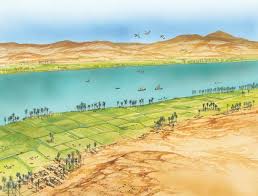
A Hierarchical Society
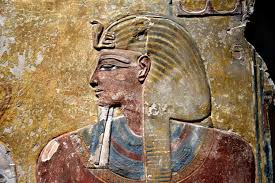
The Pharaoh — living god and supreme ruler of Egypt
Ancient Egyptian society was highly hierarchical, with the Pharaoh at the apex. Pharaohs were viewed as divine intermediaries between the gods and humans, and held absolute power over the state, religion, and law. The word pharaoh itself comes from the Egyptian word meaning "great house."
Below the pharaoh were nobles, priests, and scribes who administered religious and governmental affairs. Priests played crucial roles in maintaining religious practice. Their knowledge of sacred rituals and texts gave them influence in both spiritual and political spheres.
Scribes formed a literate elite responsible for record-keeping and administration which is a prestigious but rare profession, since literacy rates were extremely low among the general population.
The Social Pyramid of Ancient Egypt
Classes of Society
| Class | Role in Society | Estimated % of Population |
|---|---|---|
| Pharaoh & Royal Family | Absolute rulers; considered living gods; commanded armies and controlled all land | <1% |
| Nobles & Viziers | Administered provinces (nomes), collected taxes, oversaw justice | ~2% |
| Priests | Performed temple rituals, managed temple wealth, held significant political influence | ~3% |
| Scribes | Literate administrators; recorded taxes, laws, trade; highly respected | ~5% |
| Craftsmen & Artisans | Produced tools, jewelry, pottery, monumental art and construction materials | ~10% |
| Farmers | Grew wheat, barley, vegetables; formed the backbone of the economy | ~75% |
| Laborers / Servants | Worked on temples, tombs; many were conscripted workers not slaves in the classical sense | ~5% |
"There is evidence that many laborers working on the pyramids were not slaves in the classical sense, but conscripted workers receiving food, lodging, and medical care — especially during the Nile's inundation seasons when farming was not possible."
Daily Life, Family, and Culture
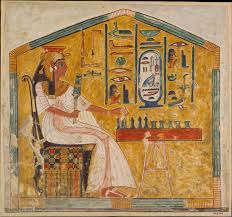
Family life depicted in Egyptian tomb paintings
Everyday life for ordinary Egyptians balanced work, religious observance, and community. Families lived in mud-brick homes near the Nile, and community events often centered around festivals honoring gods and the agricultural calendar.
Leisure activities included music, dance, board games (like Senet), and athletic contests. Food was central to social gatherings, and Egyptians enjoyed bread, beer, fish, and vegetables grown along the Nile floodplain.
Children learned basic household chores and, for boys of higher class, writing and mathematics skills that could lead to positions in administration or the priesthood.
The Unique Rights of Egyptian Women:
- Could own property and inherit land independently
- Able to enter legal contracts without male guardianship
- Could initiate divorce proceedings — rare in the ancient world
- Participated actively in economic life, including trade
- Could serve as priestesses in temple roles
- Some women rose to become Pharaoh — most notably Hatshepsut
Farming and the Agricultural Calendar:
- Akhet (Inundation Season) — July to November: Nile floods deposit rich silt
- Peret (Growing Season) — November to March: Planting wheat and barley
- Shemu (Harvest Season) — March to July: Harvesting and storing crops