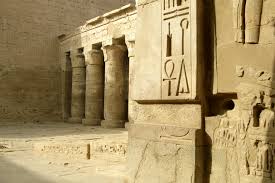
Polytheism and the Nature of Egyptian Religion
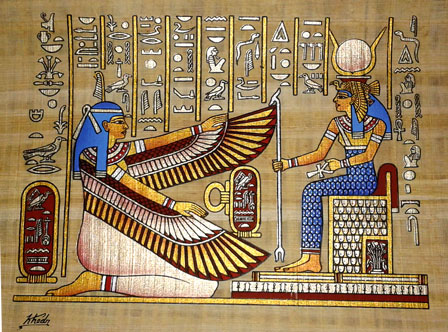
Egyptian gods depicted on ancient papyrus (Source: World History Encyclopedia)
Religion was central to Egyptian life and was woven into the fabric of society from the Old Kingdom through the Late Period. Egyptians practiced polytheism, worshipping a vast pantheon of gods and goddesses, often depicted with human bodies and animal heads. Religious practices were not separate from daily life but influenced law, royalty, art, and science.
The Egyptians believed their gods controlled natural forces, dictated moral order, and determined destiny, and so they devoted elaborate rituals, prayers, and temples to divine observance. With over 2,000 known deities, the Egyptian religious system was among the most complex of the ancient world.
"The concept of ma'at — order, balance, and cosmic harmony — was foundational to everything the Ancient Egyptians believed and built."
The concept of ma'at — order, balance, and cosmic harmony — was foundational. Pharaohs were believed to maintain ma'at on behalf of the gods, reinforcing both political authority and religious legitimacy. Failure to uphold ma'at was thought to invite chaos, flooding, drought, or enemy invasions.
Major Deities and Their Roles
Egyptian gods had specific spheres of influence reflecting social and natural phenomena. Each deity was associated with particular symbols, animals, and domains that shaped how worshippers appealed to them.
| Deity | Role / Domain | Symbol / Appearance |
|---|---|---|
| Ra | Sun god and creator deity; associated with life, renewal, and divine kingship | Falcon head with a sun disk |
| Osiris | God of the afterlife; represented death, resurrection, and fertility | Green skin, mummified form, crook and flail |
| Isis | Wife of Osiris; goddess of magic and motherhood | Throne headdress or wings spread wide |
| Anubis | Guided souls through the underworld; protected mummification | Jackal head, black skin |
| Horus | Sky god, son of Osiris; protector of the Pharaoh | Falcon head with the Eye of Horus |
| Thoth | God of wisdom, writing, and the moon | Ibis head or baboon form |
These deities in daily practice:
- State-sponsored temple rituals held daily in massive complexes like Karnak
- Household shrines dedicated to protective gods like Bes and Taweret
- Amulets worn to invoke protection from specific deities
- Festivals celebrating the gods' mythological stories throughout the year
Belief in the Afterlife
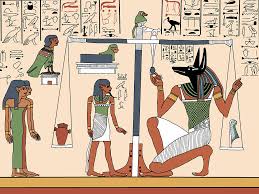
The Weighing of the Heart ceremony from the Book of the Dead
The Egyptians' belief in the afterlife was central and deeply emotional. They saw death not as an end but as a transition to eternal life. This belief was rooted in the notion that a person's ka (life force) and ba (personality) had to be reunited after death for the soul to survive.
Elaborate funerary rituals, tomb construction, and texts were all designed to facilitate this journey. Tombs were filled with goods for the afterlife, and texts such as the Pyramid Texts offered guidance through the underworld.
The Journey to the Afterlife — Step by Step:
- Death — The soul separated from the body
- Mummification — Preserving the body so the ka could return to it
- Opening of the Mouth Ceremony — Restoring the deceased's senses
- Journey through the Duat — The underworld, guided by Anubis
- Weighing of the Heart — Heart weighed against the feather of ma'at
- Judgment by Osiris — If worthy, the soul entered the Field of Reeds
Funerary Texts and Guides:
- Pyramid Texts — Oldest religious texts, carved into pyramid walls (c. 2400 BCE)
- Coffin Texts — Spells painted inside coffins during the Middle Kingdom
- Book of the Dead — Papyrus scrolls buried with the deceased in the New Kingdom