Introduction
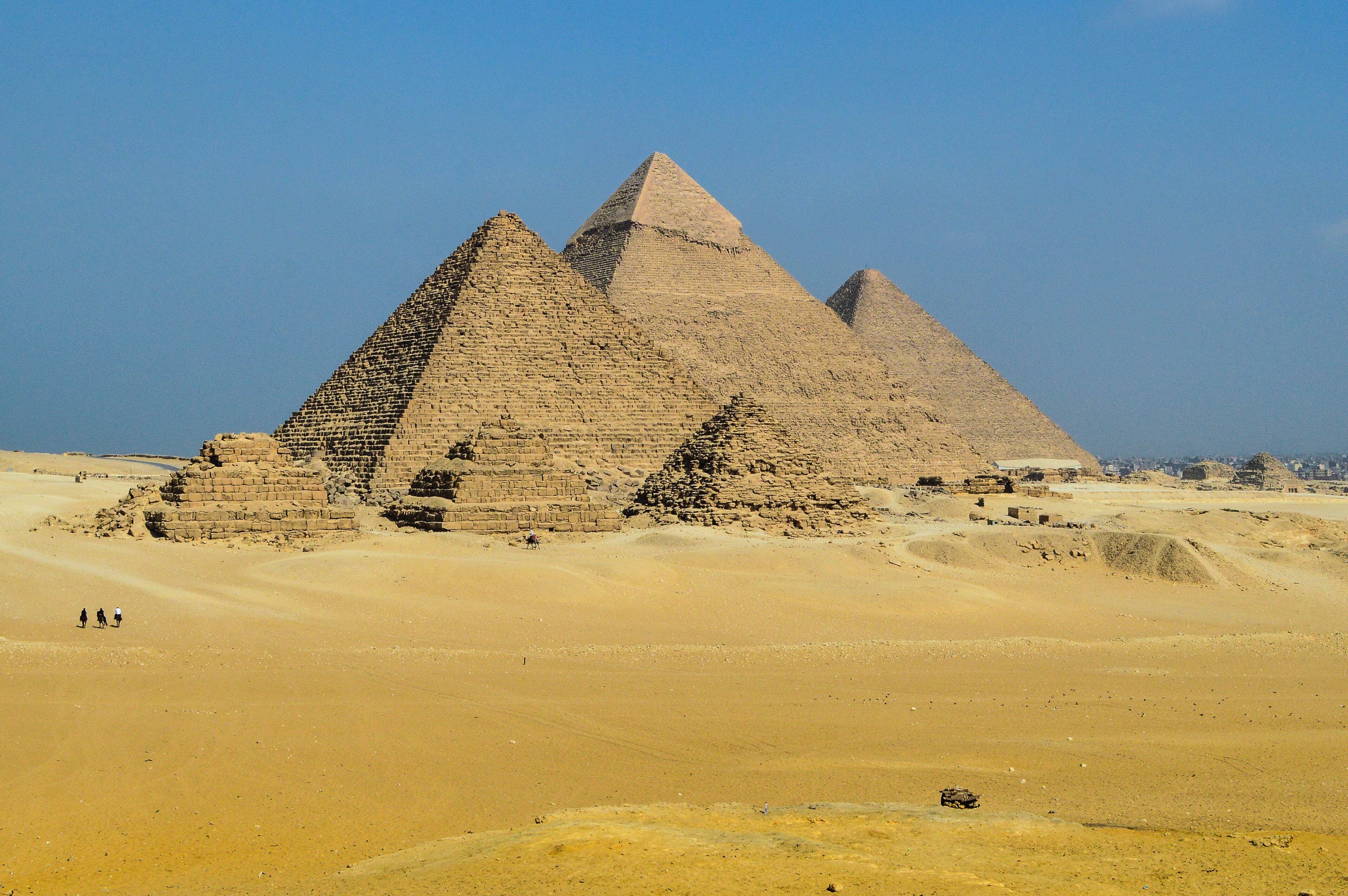
Ancient Egypt stands as one of the longest-lasting civilizations in human history, emerging around 3100 BCE and continuing for over three millennia. Its endurance was rooted in its environment, culture, and belief systems. Located along the fertile banks of the Nile River, Egyptian civilization achieved remarkable stability and cultural coherence.
Three key aspects define its identity: a pervasive religious worldview, a highly structured social system, and extraordinary architectural and technological innovations. This website explores these dimensions to demonstrate how religion shaped cultural life, how social organization structured political and economic activity, and how achievements in architecture and technology reflect both practical needs and spiritual beliefs.
"Egypt is the gift of the Nile." — Herodotus, Greek historian, 5th century BCE
Explore the Three Subtopics
☥ Religion & Beliefs
Polytheism, gods and goddesses, the concept of ma'at, and the Egyptian belief in the afterlife.
♔ Daily Life & Social Structure
The hierarchical society of Ancient Egypt — from Pharaoh to farmers and the role of women.
⛬ Architecture & Achievements
Pyramids, hieroglyphs, engineering marvels, and the writing systems of Ancient Egypt.
Quick Facts at a Glance
| Category | Detail |
|---|---|
| Civilization Began | c. 3100 BCE (Unification under Pharaoh Narmer) |
| Location | Northeastern Africa, along the Nile River |
| Language & Writing | Egyptian Hieroglyphics, Hieratic, and Demotic scripts |
| Religion | Polytheistic — over 2,000 known deities |
| Major Achievement | The Great Pyramid of Khufu at Giza (c. 2560 BCE) |
| Declined | 332 BCE — conquered by Alexander the Great |
What You Will Learn
Main Themes Covered:
- The role of polytheism and major deities like Ra, Osiris, Isis, and Anubis
- The concept of ma'at — cosmic balance and moral order
- Egyptian beliefs in the afterlife and funerary practices
- The hierarchical social structure from Pharaoh to laborers
- Daily life, family roles, and the rights of women
- Construction of the pyramids and monumental architecture
- The hieroglyphic writing system and its significance
Timeline of Study:
- Early Dynastic Period (c. 3100–2686 BCE) — Foundation of civilization
- Old Kingdom (c. 2686–2181 BCE) — Age of Pyramid builders
- Middle Kingdom (c. 2055–1650 BCE) — Cultural flowering
- New Kingdom (c. 1550–1070 BCE) — Empire and glory
- Late Period (c. 664–332 BCE) — Decline and conquest